
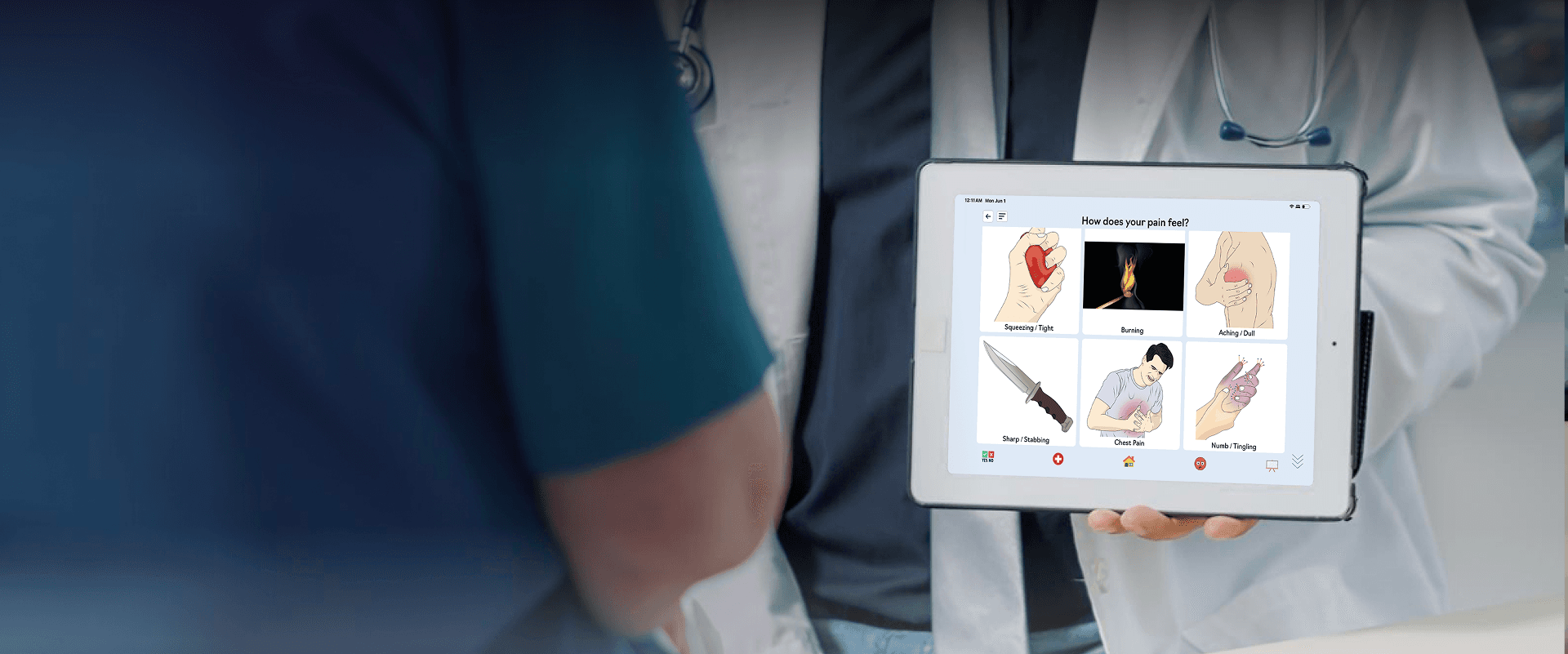
Who MedConcerns Helps
Designed for anyone who who has difficulty communicating medical concerns clearly — and for the providers who support them.
MedConcerns supports patients across a wide range of communication challenges and gives healthcare teams the tools they need to deliver safer, more equitable care.

Built for real patients, real care
Whether someone is living with aphasia, motor speech disorders, cognitive challenges, or another communication barrier, MedConcerns helps ensure their medical concerns are heard and understood.
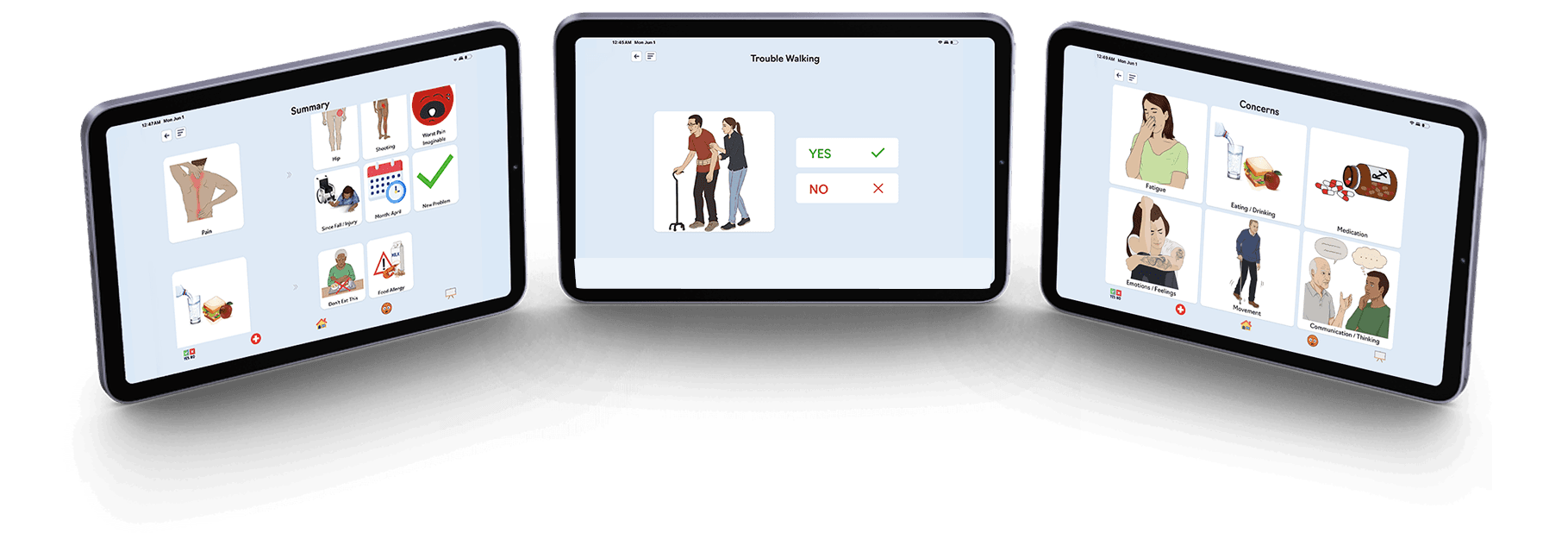

People with Aphasia or Dysarthria
People with aphasia or motor speech difficulties after stroke or brain injury who know what they want to say but need help expressing it.

Patients on Ventilators or with Trachs
Patients with ventilators or trachs who are unable to speak.

People who are Deaf or Hard of Hearing
People who are Deaf or hard of hearing, who may miss parts of spoken conversation.

Providers and Care Teams
Providers and care teams who want clearer, faster, more accurate conversations.

People with Cognitive Challenges
People with cognitive challenges like dementia who need extra time and visuals.

Limited English Proficiency
Non-native English speakers who benefit from icons and simple text to bridge language gaps.
Designed for Patients With Communication Challenges
Whether communication is affected by neurologic injury, illness, or language barriers, MedConcerns supports patients and the care teams involved in their care.
Aphasia & Cognitive-Communication Disorders
MedConcerns helps people with aphasia, dementia, and cognitive-communication disorders through images, audio, simplified text, and structured conversation support to enable participation and communication during medical care.

Motor Speech & Voice Disorders
For individuals with dysarthria, apraxia of speech, voice disorders, or those who are intubated, ventilated, or have a tracheostomy, MedConcerns offers an alternative way to communicate when speech is limited or unavailable.
Limited English Proficiency
Visual supports, simplified text, and bilingual options help patients with limited English proficiency communicate medical concerns more clearly when language differences create barriers to care.
Deaf & Hard of Hearing
MedConcerns can support Deaf and hard of hearing individuals by providing visual communication options that supplement spoken interaction in healthcare settings.
Frequently Asked Questions

Start making care more accessible
Bridge the communication gap at the point of care with a tool designed for real clinical use.
Ready to Get Started?
Contact us to learn more about bringing MedConcerns to your team.